
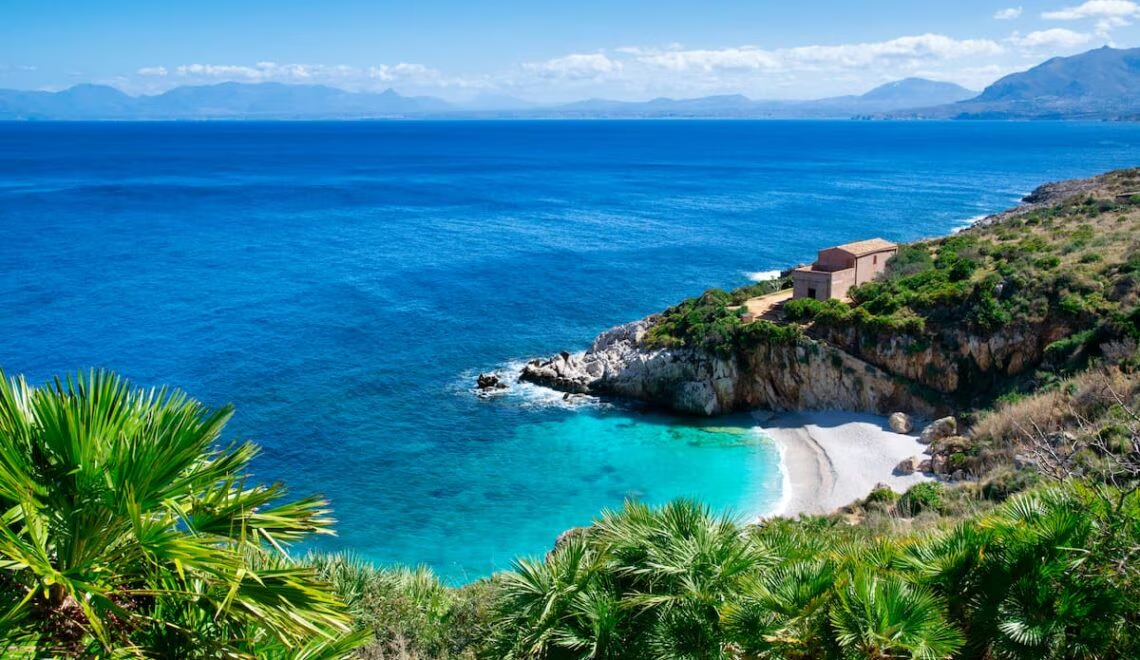
Italy’s coast is not a single experience but a collection of diverse, iconic destinations, each defined by its unique landscape, historical contribution, and regional cuisine. From the rugged cliffs of the Ligurian Sea to the sun drenched shores of the South, experiencing the Italian coast means embracing regional diversity. The key to unlocking its best lies in seeking out the distinct characteristics of each area, whether it’s the high culture of the north or the earthy warmth of the south, ensuring that every meal and every view is savored.
The Dramatic Beauty of the Ligurian Coast
The Ligurian coastline, often simply called the Italian Riviera, is home to the stunning Cinque Terre, five villages clinging dramatically to the cliffs. The beauty here is in the challenge of the terrain, where colorful buildings are stacked vertically against impossibly steep slopes. To experience this area fully, one must walk the ancient footpaths. The trails connecting the villages, such as the famous Sentiero Azzurro, offer breathtaking views of the sea and the impossibly steep terraced vineyards above, providing a perspective few visitors see from the water. While visiting one or two of the villages, like Vernazza or Manarola, is a delight, taking the time to hike a portion of the coastline offers a deeper appreciation for the local resilience and the extraordinary natural beauty. This northern coast is also famous for its pesto, which, when tasted locally, often uses the freshest Ligurian basil and pine nuts.
Campania and the Historical Bay of Naples
The Bay of Naples and the Campania region offer a richer, more chaotic, and deeply historical coastal experience. This area is defined by the imposing presence of Mount Vesuvius and the archaeological wonders it preserved. Day trips to the ancient sites of Pompeii and Herculaneum are essential for understanding Roman life frozen in time. However, the coastal gems are the islands of Capri and Ischia, and the famed Amalfi Coast. The Amalfi Coast, with its winding road and famous towns like Positano and Amalfi, is a feast for the senses, known for its vibrant ceramics, its sweet lemon groves, and its dramatic cliffs plunging into the Tyrrhenian Sea. The region’s culinary claim to fame is its incredibly fresh seafood, cooked simply, and, of course, the birthplace of modern pizza, which must be enjoyed hot from a Neapolitan wood-fired oven. The energy of Naples itself is an experience, a living, breathing historical city that acts as a vital hub for the region.
The Underrated Coast of Sicily
For a taste of Mediterranean crossroads history, the coast of Sicily is unparalleled. Taormina, perched on a hill overlooking the Ionian Sea, features an ancient Greek theater that provides one of the most spectacular views in all of Italy, with Mount Etna smoking in the background. The beaches here are lovely, but the true draw is the blend of cultures—Greek, Roman, Arab, and Norman—evident in the architecture and the robust, complex cuisine. Sicily’s seafood is incomparable, and its vibrant street markets, particularly in Palermo and Catania, offer an immediate connection to local life and the island’s fierce independence. The island’s history as a strategic port is visible everywhere, from its defensive towers to its diverse culinary influences.
Touring Efficiency
Because Italy’s coast is so geographically varied and the regions are widely separated, linking these experiences efficiently often requires a strategic approach. European cruises offer the exceptional convenience of reaching several distinct coastal regions—from the Tuscan coast near Livorno, which provides access to Florence and Pisa, to the southern ports of Naples and the iconic city of Venice—without the need for multiple stressful train and hotel transfers. This allows the traveler to focus their time and energy on exploring the vibrant life and deep history of the port of call rather than the logistics of moving between them. Experiencing the Italian coast is a journey through history, geology, and unparalleled gastronomic tradition, demanding an appetite for both beauty and flavor.